



Info Allgemein
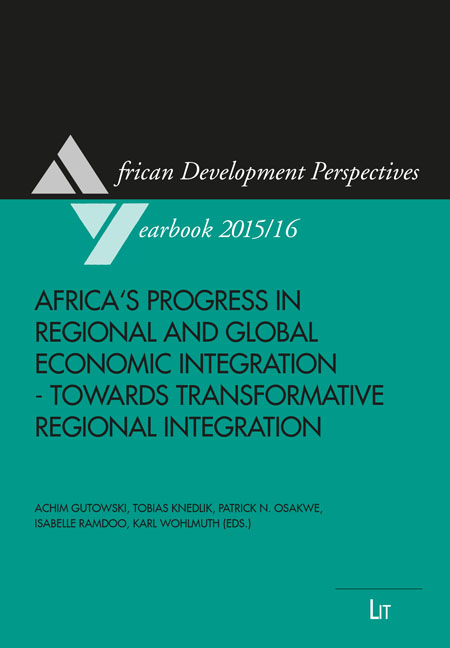
In this volume a new approach is envisaged. Based on Africa’s deep routed structural problems the key aspect of a transformative regional integration is how to promote structural transformation by adapted strategies and policies for the whole region. In this context the African Regional Economic Communities (RECs), but also the Tripartite Free Trade Area (TFTA) and the Continental Free Trade Area (CFTA) are evaluated. Specific problems of a more transformative regional integration agenda are discussed (food security and agriculture; industry, enterprise growth and competition; and more favourable agreements with extra-regional partners, like the Economic Partnership Agreements with ECOWAS and ECA). Also, three global value chains (for diamonds, shea butter, and sesame) are related to their regional and sub-regional impacts in Africa. The potential contribution to a more transformative regional integration process is discussed.
Complementary to Volume 18 is Volume 19 with the title “Africa’s Progress in Regional and Global Economic Integration – Towards New Trade and Investment Policies”. Two major issues are discussed – first, the role of “New Trade Policies in Africa for Structural Change” and second, the role of “New Investment Policies in Africa for Structural Change”. The contribution to a more transformative regional integration agenda for Africa is presented. Volume 19 for 2017 is due to appear in September 2016.
Experts from UNECA/Addis Ababa/Kigali, UNCTAD/Geneva, FAO/Rome, ECDPM/Maastricht, TRALAC/Stellenbosch, and many other researchers from universities in Africa and Europa have presented detailed analyses. Experts from Sudan, Ghana, South Africa, and Botswana have presented analytic essays and country cases. The cooperation with Patrick N. Osakwe, United Nations Conference on Trade and Development/UNCTAD, Head of the Trade and Poverty Branch, was important as he brought in the concept of a more Transformative Regional Integration. Professor Karl Wohlmuth/University of Bremen, Patrick N. Osakwe/UNCTAD and Isabelle Ramdoo/ECDPM have written introductory essays to the three major Units of the Volume 18. It was proposed by UNECA to present the volumes 18 (for 2015/16) and 19 (for 2017) at a Launch Event in Kigali, Rwanda. Preparations for the Launch Event are ongoing.
IMPULSE – Der Wissenschaftsblog
Der Wissenschaftsblog der Universität Bremen ist mit der erste seiner Art: Ein Blog, auf dem Wissenschaftlerinnen und Wissenschaftler fachübergreifend und aus ihrer Perspektive über ihre Forschung berichten.
IMPULSE – Der Wissenschaftsblog stellt wissenschaftliche Erkenntnisse und Zusammenhänge für die Öffentlichkeit verständlich dar. Interessierte Bürgerinnen und Bürger haben durch die Kommentarfunktion die Möglichkeit, direkt Kontakt zum Autor aufzunehmen und darüber möglicherweise sogar neue Fragestellungen und damit Impulse an die Wissenschaftlerinnen und Wissenschaftler zu geben.

Im „Handelsblatt“ (Online-Ausgabe) findet sich eine interessante Serie zu dem Produkt Gummi Arabicum, bei dem der Sudan Weltmarktführer ist. Professor Karl Wohlmuth hat als Interviewpartner mitgewirkt.
Aus dem Bericht: „In Süßigkeiten, Softdrinks oder Tabletten – Gummi Arabicum ist ein wichtiger Bestandteil vieler Produkte. Um den Import nicht zu gefährden, änderten die USA sogar ihre Gesetze. Die Weltwirtschaft ist abhängig vom Harz.“ (von Rebecca Ciesielski, 14. 3. 2015, 17:34 Uhr)
Titel des Gesamtberichtes:
Abhängig vom Krisenkleber (14. 3. 2015)
Handelsblatt, 5 Teile:
Teil 1: Abhängig vom Krisenkleber
http://www.handelsblatt.com/unternehmen/industrie/gummi-arabicum-abhaengig-vom-krisenkleber/11499908.html
Teil 2: Naturharz aus dem Krisengebiet
http://www.handelsblatt.com/unternehmen/industrie/gummi-arabicum-naturharz-aus-dem-krisengebiet/11499908-2.html
Teil 3: Gummi in der Coca-Cola
http://www.handelsblatt.com/unternehmen/industrie/gummi-arabicum-gummi-in-der-coca-cola/11499908-3.html
Teil 4: Wer das Gummi Arabicum verbannt hat
http://www.handelsblatt.com/unternehmen/industrie/gummi-arabicum-wer-das-gummi-arabicum-verbannt-hat/11499908-4.html
Teil 5: „Ein umweltpolitischer Ausverkauf“
http://www.handelsblatt.com/unternehmen/industrie/gummi-arabicum-ein-umweltpolitischer-ausverkauf/11499908-5.html
In der Online-Zeitschrift der Friedrich-Ebert–Stiftung finden sich von Zeit zu Zeit Artikel zur Lage im Südsudan. Der Sudanexperte Professor Karl Wohlmuth hat Kommentare zu einigen dieser Berichte geschrieben:
http://www.ipg-journal.de/kolumne/artikel/das-stellvertreter-scheitern-1083/
Das Stellvertreter-Scheitern
Der Aufbau des jungen Staates Südsudan ist fehlgeschlagen. Der Westen hat frühe Anzeichen dafür beharrlich ignoriert.
Von: Bettina Rühl, veröffentlicht am 28.09.2015
Kommentar:
Karl Wohlmuth, Bremen schrieb am 30.09.2015
http://www.ipg-journal.de/kurzinterview/artikel/zu-frueh-fuer-grossen-optimismus-1386/
„Zu früh für großen Optimismus“
Henrik Maihack über die geplante Rückkehr Riek Machars nach Juba und das Friedensabkommen im Südsudan.
Von: Henrik Maihack, veröffentlicht am 18.04.2016
Kommentar:
Karl Wohlmuth, Bremen schrieb am 28.04.2016
The Research Group on African Development Perspectives has opened the International Call for Papers for Volume 20 of the African Development Perspectives Yearbook. Major theme for Volume 20 is “Science, Technology and Innovation Policies for Inclusive Growth in Africa”. Guest Editors and Contributors are invited to cooperate with the Research Group on this volume (see the International Call for Papers). Main issues proposed for the volume are outlined in detail in the International Call for Papers. Beside of analytical studies and empirical assessments of African National Innovation systems and reports on the working of STI Policies in African countries, a deep country focus is planned for Tunisia, Sudan, South Africa, Kenya, Cameroon, and Nigeria. Important is also the policy focus of the contributions to Volume 20. Please send your Abstract as soon as possible!
Volume 18 of the African Development Perspectives Yearbook for 2015 has the title: “Africa’s Progress in Regional and Global Economic Integration – Towards Transformative Regional Integration”. The main issue is how regional integration in Africa can become more transformative.
Volume 18 will be published in early 2016. The three Units (Parts) of Volume 18 are:
Unit 1: Towards Transformative Regional Integration in Africa
Unit 2: Specific Policy Issues of Regional Integration in Africa
Unit 3: Global Value Chains and Regional Impacts in Africa
Patrick N. Osakwe, Head, Trade and Poverty Branch, United Nations Conference on Trade and Development (UNCTAD), Geneva, Switzerland, and
Isabelle Ramdoo, Deputy Head of the Economic Transformation and Trade Programme at the European Centre for Development Policy Management (ECDPM) in Maastricht, The Netherlands, have joined for Volume 18 the Editorial Committee of the Professors Tobias Knedlik (Managing Editor), Achim Gutowski (Book Review Editor) and Karl Wohlmuth (Volume Editor).
Volume 19 of the African Development Perspectives Yearbook for 2016/17 has the title “Africa’s Progress in Regional and Global Economic Integration – Towards New Trade and Investment Policies”. The main issue is how trade and foreign investment can support structural transformation in Africa.
Volume 19 will also be published in 2016. The three Units (Parts) of Volume 19 are:
Unit 1: New Trade Policies in Africa for Structural Change
Unit 2: New Investment Policies in Africa for Structural Change
Unit 3: Book Reviews and Book Notes
Oyebanke Oyelaran-Oyeyinka, Professor of Economics, Columbia University, New York, U.S.A, and with Dalberg Global Development Advisors, and
Reuben A. Alabi, Professor of Agricultural Economics, Department of Agricultural Economics, Ambrose Alli University, Ekpoma, Nigeria, and Guest Professor and Project Director at IWIM for the period 2015-2017, have joined for Volume 19 the Editorial Committee of the Professors Tobias Knedlik (Managing Editor), Achim Gutowski (Book Review Editor) and Karl Wohlmuth (Volume Editor).
See on the African Development Perspectives Yearbook Project: http://www.iwim.uni-bremen.de/africa/africanyearbook.htm , and http://www.iwim.uni-bremen.de/forschung/forsch-adpy.htm , and https://www.karl-wohlmuth.de/african_development_perspectives_yearbook/ , and https://www.karl-wohlmuth.de/afrikanische_entwicklungsperspektiven/ .
Acht Wissenschaftler der Universität Bremen und der Hochschule Bremen haben an einer vom tunesischen Kooperationspartner, der Spitzenuniversität ENIT, ausgerichteten Konferenz in Hammamet Vorträge gehalten. Die Konferenz hatte das Thema „Reindustrialisierung in Tunesien – Der Weg hin zu fairer und nachhaltiger Entwicklung und zu weiterer Demokratisierung“ und wurde von den deutschen und tunesischen Partnern gemeinsam geplant. Diskutiert wurden neue Industrialisierungskonzepte, die es Tunesien ermöglichen sollen, einerseits die Wettbewerbsfähigkeit seiner Industrien zu steigern und andererseits die Beschäftigung zu erhöhen. Die Arbeitslosigkeit, insbesondere auch von ausgebildeten Akademikern, ist in Tunesien sehr hoch (und sind faktisch weit höher als in den offiziellen Statistiken ausgewiesen). Effektivere Wachstums- und Beschäftigungspolitiken wurden diskutiert; diese sollen dazu beitragen, dass gleichzeitig ökonomische und soziale Ziele erreicht werden können. Zudem soll dadurch die weitere Demokratisierung in Tunesien abgesichert und verstärkt werden.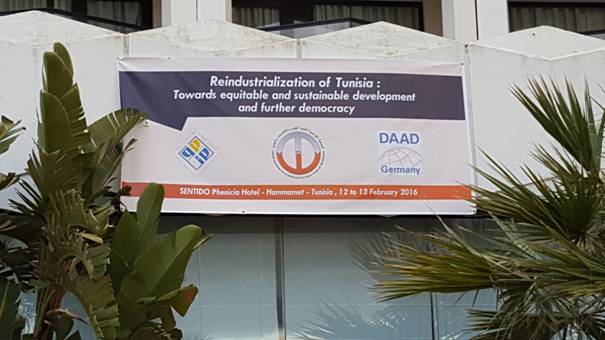
Die internationale Konferenz in Hammamet, Tunesien wurde von der tunesischen Wissenschaftsvereinigung TAASTI und vom DAAD gefördert
Zur bremischen Delegation gehörten die drei Wirtschaftsprofessoren der Forschungsgruppe Afrikanische Entwicklungsperspektiven (Professor Dr. Hans-Heinrich Bass von der Hochschule Bremen, Professor Dr. Achim Gutowski, ISS Hamburg, und Prof. Dr. Karl Wohlmuth, FB 7, Universität Bremen). Die drei Professoren berichteten über neue Industrialisierungs- und Beschäftigungskonzepte für Tunesien sowie über Grundfragen der Förderung von Wissenschaft, Technologie und Innovation in nationalen Innovationssystemen und in industriellen Unternehmen. Das An-Institut BIBA war durch zwei Wissenschaftler vertreten (Dr. Marco Lewandowski, in Vertretung von Prof. Dr.-Ing. Klaus-Dieter Thoben, und Herr Zied Ghrairi, ein gebürtiger Tunesier). Die beiden Experten berichteten über Projekte des BIBA und über die Bedeutung von Industrie 4.0 für die zukünftige Kooperation der deutschen Industrie mit Tunesien. Der Leiter von UniTransfer/BRIDGE/Technologiepark Bremen, Herr Dr. Martin Heinlein, berichtete über die Erfahrungen in Bremen, einen Technologiepark im Umfeld und in Zusammenarbeit mit der Universität Bremen auf- und auszubauen. Dr.-Ing. Jens Hoheisel, Ko-Managing Direktor der Innowi GmbH, Bremen, erläuterte am bremischen Beispiel, wie Patente der bremischen Hochschulen möglichst effektiv kommerzialisiert werden können. Dr. Yildiray Ogurol, Geschäftsführer des ZMML (Zentrum für Multimedia in der Lehre) berichtete über die neue Rolle von Online-Kursen (MOOCs) für die Lehre in Deutschland und in Tunesien und für die Weiterbildung von Managern industrieller Unternehmen.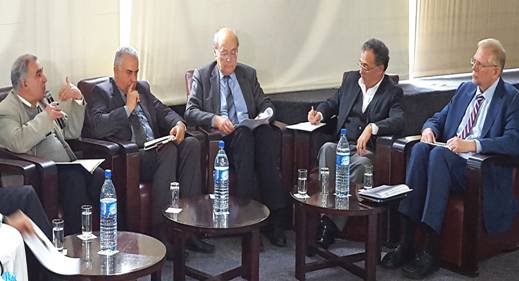
Podiumsdiskussion in Hammamet mit Professor Karl Wohlmuth, Professor Hans-Heinrich Bass und tunesischen Konferenzteilnehmern über die Bedeutung von Wissenschaft, Technologie und Innovation für die Reindustrialisierung in Tunesien
Auf tunesischer Seite waren an der Konferenz neben Professoren der ENIT und mehrerer tunesischer Universitäten Unternehmer, Vertreter von Ministerien, Mitarbeiter von Verbänden und Leiter von NGOs vertreten. Teilgenommen haben auch Studierende und Dozenten des Studiengangs „Engineering and Technology Policy“ (ETP); an der Einrichtung dieses Studienganges an der ENIT in Tunis war die Forschungsgruppe Afrikanische Entwicklungsperspektiven beratend beteiligt. Auch der tunesische Arbeitgeberverband UTICA, einer der vier Friedensnobelpreisträger des Jahres 2015, war an der Konferenz mit Referenten beteiligt. Alle bei der Konferenz abgehandelten Themen stehen jetzt in Tunesien im Zentrum der Reformdiskussion, denn seit der Revolution des Jahres 2011 sind wohl politische Reformen erfolgt, doch die so dringlichen Wirtschafts- und Sozialreformen sind bisher unterblieben. Insbesondere gilt es in Tunesien, den De-Industrialisierungsprozess besser zu managen und durch pro-aktive Re-Industrialisierungsstrategien Beschäftigung zu schaffen, was angesichts der hohen Raten der Arbeitslosigkeit in Tunesien besonders wichtig ist. Ein Themenschwerpunkt bei der Konferenz war die Wissenschafts-, Technologie- und Innovationspolitik, denn die Reform des Nationalen Innovationssystems ist in Tunesien eine Voraussetzung dafür, dass die Industrie modernisiert werden kann. Zudem benötigen die tunesischen Unternehmen dringend qualifizierte Arbeitskräfte und Universitätsabsolventen, die es Tunesien ermöglichen sollen, seine Industrien effizienter in globale Wertschöpfungsketten zu integrieren. Die tunesischen Unternehmen brauchen auch Unterstützung bei F&E-Projekten, denn bislang gibt die öffentliche Forschung des Landes nur wenig Impulse für die Weiterentwicklung der industriellen Produktion (vgl. zum Programm der Konferenz die PDF ReindusConf-Booklet und zu den Abstracts der bremischen Delegation die PDF Wohlmuth Abstracts).
Im Anschluss an die Konferenz war Professor Wohlmuth Gast beim Ersten Deutschen Forschungstag, der in Tunis vom DAAD ausgerichtet wurde. Etwa 100 tunesische Wissenschaftler wurden darüber informiert, wie bilaterale und multinationale Hochschulkooperationen initiiert, entwickelt und gemanagt werden können. An Beispielen wurde deutlich gemacht, wie tunesische, deutsche und drittstaatliche Universitäten aus Kooperationen möglichst große Vorteile ziehen können.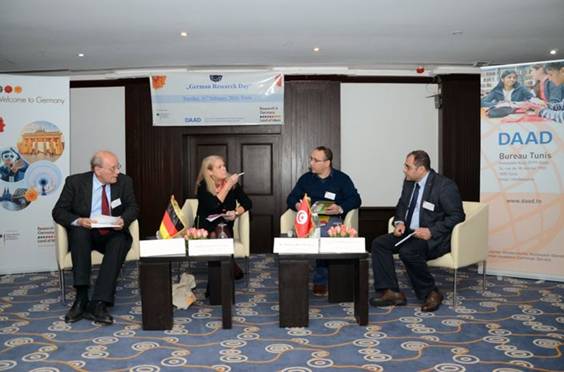
Professor Wohlmuth diskutierte in Tunis mit der Direktorin des DAAD und Kollegen aus Sousse und Kairo
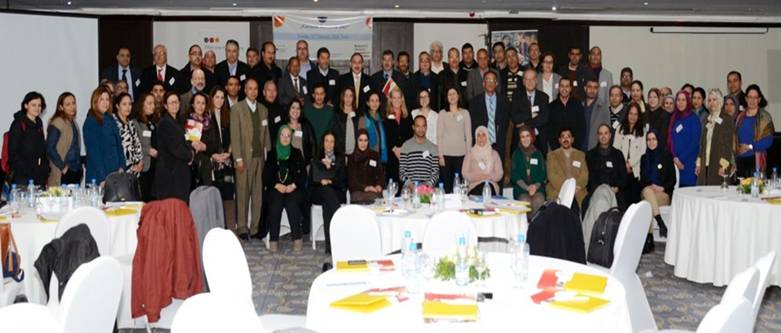 Die tunesischen Teilnehmer am ersten Deutschen Forschungstag in Tunis waren Professoren und wissenschaftliche Mitarbeiter von tunesischen Universitäten und Forschungsinstituten
Professor Wohlmuth hatte in Tunis auch Treffen mit wichtigen Wirtschaftsberatern der tunesischen Regierung, mit Wirtschaftsprofessoren, mit Ministeriumsvertretern und mit Leitern von UN-Organisationen. Bei einem Expertentreffen im „Tunisian Institute for Competitiveness and Quantitative Studies/ITCEQ“ wurde über das Thema der „Wachstumsbarrieren in Tunesien“ diskutiert. Die Lage in Tunesien ist komplex und bedrohlich, weil bisher – fünf Jahre nach der Revolution vom 14. Januar 2011 - Wirtschaftsreformen kaum durchgesetzt werden konnten. Eine fragile Regierungskoalition und schwache Institutionen verhindern Reformen und einen Wirtschaftsaufschwung. Umso wichtiger sind direkte Kontakte und Arbeitsprogramme zwischen tunesischen und deutschen Wissenschaftlern. Die Kooperation von Bremen und Tunis im Rahmen der Forschungsgruppe Afrikanische Entwicklungsperspektiven soll daher weiterentwickelt werden. So ist eine weitere Konferenz in Tunis über die Bedeutung der Innovationspolitik für die industrielle Entwicklung in Tunesien, Libyen und Algerien geplant. Tunesische Ökonomen werden auch am Band 20 des African Development Perspectives Yearbook zum Thema „Forschung, Technologie und Innnovation und inklusives Wachstum in Afrika“ mitarbeiten. Auch weitere Forschungsarbeiten im Zusammenhang mit der Erarbeitung einer „Nationalen Beschäftigungsstrategie“ für Tunesien sind vorgesehen. Das BIBA und das ZMML beabsichtigen, im Rahmen von Erasmus Plus und anderen Förderprogrammen mit Wissenschaftlern und Wissenschaftlerinnen der ENIT zu kooperieren.
Es ist perspektivisch für die bremischen Universitäten sehr sinnvoll, die bereits existierenden Kooperationen zwischen Universitäten in Bremen und Tunesien zukünftig besser zu koordinieren. Es gibt bereits zahlreiche Kooperationen zwischen bremischen und tunesischen universitären Projektgruppen; ein Erfahrungsaustausch unter den Projektleitern könnte sicherlich allen Projekten nützen. Professor Karl Wohlmuth wird sich bemühen, einen Rahmen für die Kooperation vorzuschlagen.
Die meisten Präsentationen von der Konferenz in Hammamet und die Präsentation für den Deutschen Forschungstag in Tunis sind als PDFs in diesem Bericht verfügbar:
Präsentation Karl Wohlmuth in Hammamet über Re-Industrialisierungsstrategien: PDF Wohlmuth-Tunis-2
Präsentation Karl Wohlmuth in Hammamet über STI-Politik-Foren als Instrument für Tunesien: PDF Wohlmuth-STI Policy Forum Tunisia
Präsentation Karl Wohlmuth über multilaterale universitäre Kooperationen, Deutscher Forschungstag in Tunis: PDF Wohlmuth- German Research Day
Präsentation Marco Lewandowski: PDF Tunesien BIBA
Präsentation Marrtin Heinlein: PDF Präsentation Technologiepark
Präsentation Ghriari: PDF Tunisia BIBA
Präsentation: Jens Hoheisel: PDF InnoWI Tunisia
Präsentation Yildiray Ogurol: PDF mooc-presentation
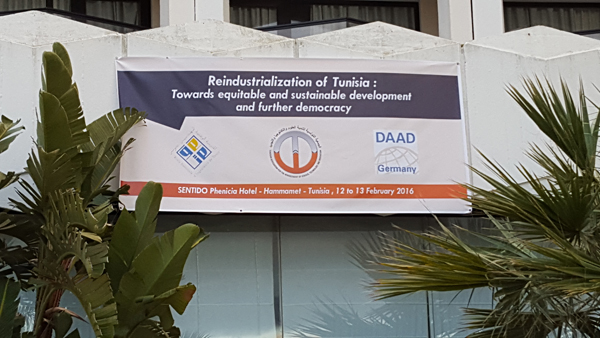
The Conference Delegates Met at the Sentido Phenicia Hotel in Hammamet, Tunisia
The Conference started with a panel discussion. The panellists, among them Professor Karl Wohlmuth from the University of Bremen and Professor Hans-Heinrich Bass from the University of Applied Sciences Bremen, discussed about the “Role of Science, Technology and Innovation (STI) for Reindustrialization in Tunisia”. Professor Karl Wohlmuth emphasized ten key global industrial megatrends, as industrial development is shaped by strong global driving forces, such as digitalization, miniaturization, multi-faceted globalization, deeper forms of global value chain networking, intelligent (smart) specialization, use and spread of green technologies, industrial production through new technologies for saving resources, recycling and reusing materials, adapting to diversified and rapidly changing consumer preferences, and new forms of flexible production and labour use.
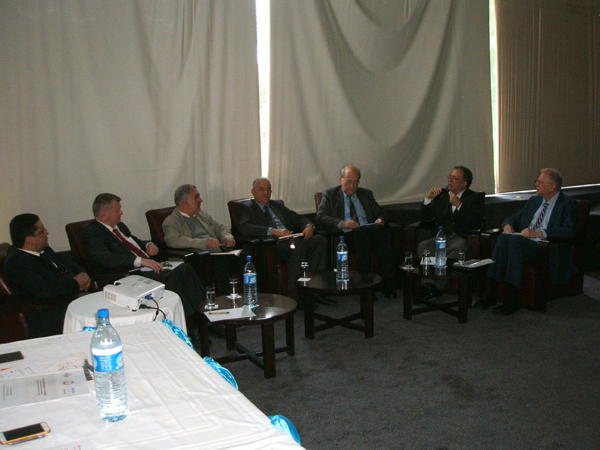
The Panellists discuss about the “Role of STI for Reindustrialization in Tunisia”
A representative from the Ministry of Industry spoke about new industrial policy initiatives in Tunisia. Although the Ministry of Industry has in some industrial policy areas a lead role, many other Ministries and Agencies have a say on industrial development. Therefore, Policy Forums were considered as important so as to address the inter-sectoral issues of Reindustrialization in Tunisia.
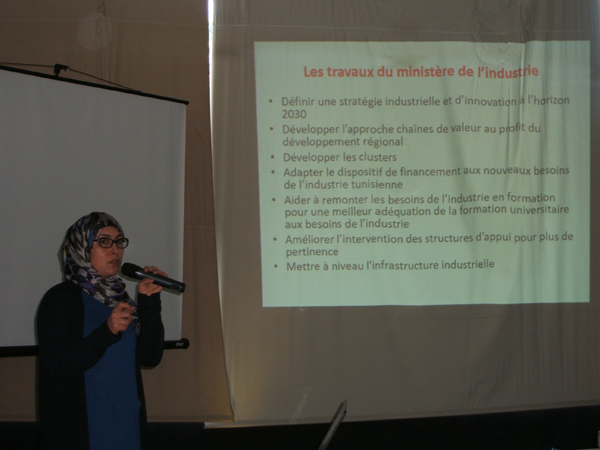
A presentation about the “Industrial Development Initiatives of the Tunisian Ministry of Industry”
The professors from the Research Group on African Development Perspectives Bremen gave presentations on key Reindustrialization issues. Professor Karl Wohlmuth gave two presentations. In the first presentation he discussed the causes of deindustrialization in Tunisia and the various options for reindustrialization; a new strategy for industrial development has to be based on pro-active STI policies (see the PDF Wohlmuth-Tunis-2). In the second presentation Professor Wohlmuth made proposals for the establishment of STI Policy Forums for guiding the reindustrialization process in Tunisia (see the PDF Wohlmuth-STI Policy Forum).
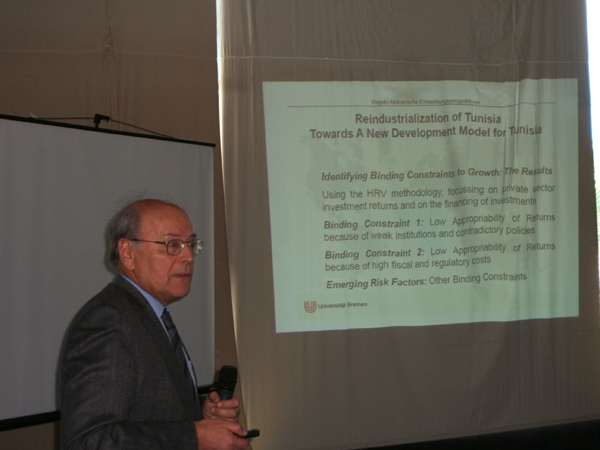
Professor Karl Wohlmuth gave a presentation about “Deindustrialization and Reindustrialization in Tunisia”
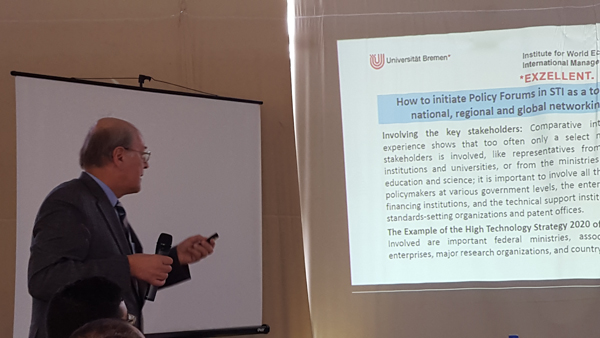
Professor Karl Wohlmuth during his presentation about the “Role of STI Policy Forums in Tunisia”
Professor Hans-Heinrich Bass gave a presentation on “Strengthening the Role of Global Value Chains for a Successful Reindustrialization Process in Tunisia”; as Tunisia has lost in economic complexity in recent years; new approaches are needed to reverse this trend. Professor Achim Gutowski, ISS Hamburg/IWIM Bremen, spoke about “Financing Innovations in Tunisia and Germany”; as Tunisia has a financing gap in industrial innovations of the private sector, there is great interest in the modes how Germany is promoting innovation financing.
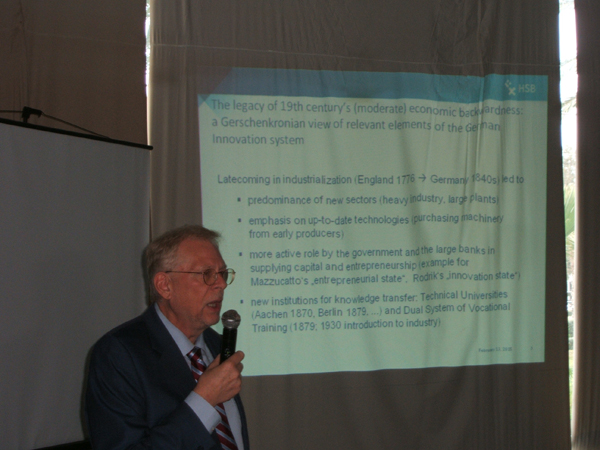
Professor Hans-Heinrich Bass spoke about the “Strategies to Strengthen the Integration of Tunisia into Global Industry Value Chains”
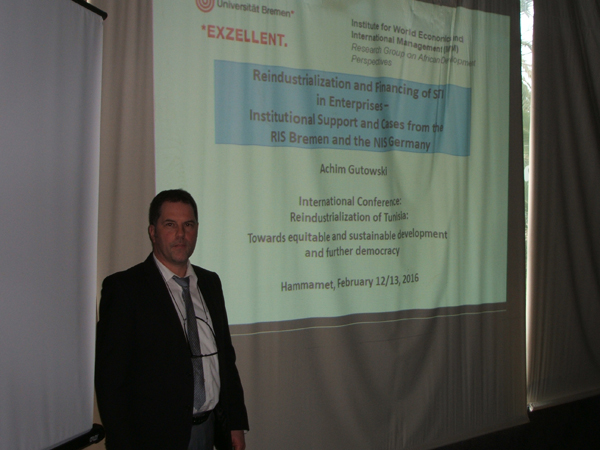
Professor Gutowski gave a presentation about “Financing Innovations in Germany and Tunisia”
All over the conference sessions there was a lively discussion. For the Master students of the ETP programme at ENIT in Tunis a Foresight Analysis course was held as a closing session of the conference (financed by DAAD). New instruments of foresight analyses were presented as well as results from foresight studies concerning future global industrial development patterns.
Towards a New Development Model for Tunisia – A Precondition for Reindustrialization
A major outcome of the conference in Hammamet was the insight that Tunisia has to overcome the development model inherited form Ben Ali so as to solve the major economic and social problems. Five years after the Revolution this task is not achieved. The Conference Lectures started with a speech by Professor Karl Wohlmuth, Director of the Research Group on African Development Perspectives, IWIM, University of Bremen, Germany. He introduced in his presentation the theme “Deindustrialization, Reindustrialization and the Contribution of Coherent Industry and STI Policies: What are the Tasks ahead for Tunisia?”. In his presentation he considered key issues of Tunisia’s economic transformation process. The Tunisian Government is on the way to design a new development model so as to overcome the pre-revolution economic structures and modalities of policy-making (“Ben Ali legacy”). Based on the HRV (Hausmann/Rodrik/Velasco) decision tree to find out the most binding constraints to growth, the Tunisian government and international experts acknowledge that the “low appropriability” of the returns to private business activity is still the most important barrier causing low levels of investment and employment generation in the country.
As “low appropriability” of the returns to investment is caused by many factors (corruption, incoherent economic policies, confiscatory high levels of total tax rates, arbitrary administrative decision-making, lack of competition, advantages of political connectivity, privileges of state-owned enterprises, delays in implementing reforms, and excessive costs of regulation due to oversized bureaucratic structures, etc.), the task of establishing a new development model is extremely complex. Other factors retarding growth are also considered, such as human capital, infrastructure, innovation, finance, macro and micro risks, but these factors are not considered as binding as the “low appropriability” of private returns to investment factor is. On this basis Professor Karl Wohlmuth discussed the deindustrialization process of Tunisia and the options for reindustrialization, reflecting also on the role of pro-active STI policies for Tunisia (see the full text of synopsis in PDF Wohlmuth-Abstracts and Presentation PDF Wohlmuth-Tunis-2). Although there is an ongoing debate on economic reforms in Tunisia, it is necessary to shorten drastically the extremely long implementation cycle of reform laws from Ministries to Cabinet and Parliament and then back to the Ministries and Implementation Agencies. While the reforms of the Investment Code have started already in 2009 (before the Revolution), up to now only drafts are ready at Ministerial Level, but no decision was made in Cabinet and no parliamentary debate has taken place about an approved draft. Old laws, regulations and procedures prevail.
According to continent-wide analyses and country-specific information Africa’s Middle Class has grown rapidly in the past two decades, and a further growth is anticipated. Although there are great differences in measurement, based on income, consumption and wealth indicators, the respective ranges for defining the middle class differ widely and matter when separating the middle class from the poor and the rich in Africa. The empirical evidence points to a further growth of Africa’s middle class, but the views on the development impacts of this growth differ. In the discussion among the Africanists quite often a link is made between the growth of the African Middle Class and the economic growth in Africa. The “Africa Rising” story is based on the expectation that there will be high economic growth rates in Africa also in the future and that Africa’s Middle Class will fuel it. Because of the importance of this link it is necessary to assess critically these growth perspectives. This is done in a new book “The Rise of Africa’s Middle Class”, to be published in 2016 by Zed Books. It is edited by Professor Henning Melber, Senior Advisor/Director Emeritus, The Dag Hammarskjöld Foundation, Uppsala/Sweden and Guest Professor at various universities in Africa and Europe.
The Rise of Africa's Middle Class
ISBN: 9781783607136 (Paper)ISBN: 9781783607143 (Cloth)

Professor Oluyele Akinkugbe, University of the Witwatersrand, South Africa and Professor Karl Wohlmuth, University of Bremen have contributed to this book with a chapter on “Africa's Middle Class, Africa's Entrepreneurs and the Missing Middle”. This study is based on researches about the growth of Africa’s Middle Class and the impacts on the development of Africa’s Entrepreneurship. Specifically, the chapter investigates the role of Africa’s Middle Class for closing the “Missing Middle”, the gap between the few large and the many small and informal enterprises in Africa. The question is raised if the growth of Africa’s Middle Class will contribute to the growth of African enterprises so that the “Missing Middle” development trap can be overcome. An analysis of African enterprises and entrepreneurs is presented, by type of economic characteristics (survival versus growth-oriented enterprises) and by type of economic motivation (necessity-driven versus opportunity-driven entrepreneurs). The purpose of the analysis is to assess if the growth of Africa’s Middle Class will create a viable entrepreneurship sector and a dynamic class of entrepreneurs. Also the role of development policy is investigated in this context; it is asked if and how public development policies can support the growth of African enterprises and of a dynamic African entrepreneurial class and to what extent these are rooted in the growing African middle class (see the link to the new book on “The Rise of Africa’s Middle Class” at Zed Publishers: http://press.uchicago.edu/ucp/books/book/distributed/R/bo25073345.html ). Professor Karl Wohlmuth has presented in 2014 the study “African Lions, African Tigers, and Emerging African Middle Classes – A Very Skeptical Note Extended” (Link: http://www.iwim.uni-bremen.de/files/dateien/1401_african_lions_sceptical.pdf ). In this study the “Africa Rising” story is critically examined and related to the growth of Africa’s Middle Class.
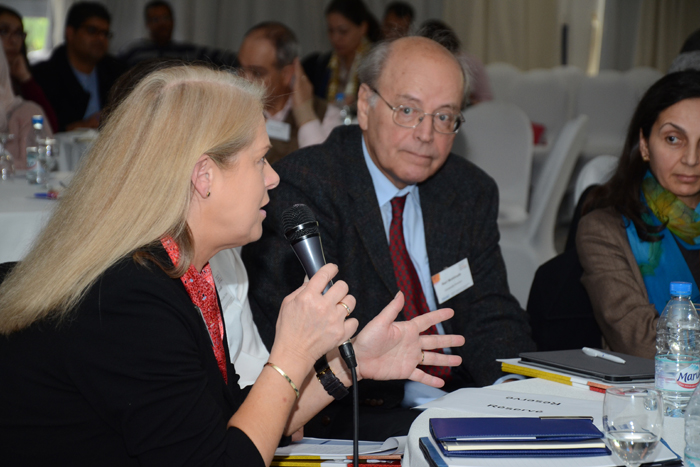
In a Panel Discussion three main issues were discussed: How to find cooperation partners in Germany? How to shape and develop partnership programmes in research and teaching? How to develop multilateral cooperation projects? These issues were discussed by international experts: Professor Karl Wohlmuth, University of Bremen (Germany), Dr. Ramzi Ben Amara, University of Sousse (Tunisia), Professor Abdel Meguid Kassem, Cairo University (Egypt); the Panel was moderated by the Director of the DAAD Office in Tunis, Beate Schindler-Kovats.

There was also intensive reporting about the DAAD conference in Tunis (see below):
Report about the Conference: https://www.daad.de/miniwebs/ictunis/de/26080/index.html
Photo Gallery: https://www.dropbox.com/sh/dycgyqmiq7ltap1/AACgjdHOFnIj_rI3dsw0znV4a?dl=0
Der Wissenschaftsblog, Universität Bremen, Webaccess:
blogbeitrag__tunesien___wohlmuth_2_2018c.pdf
Übernommen von: http://www.karl-wohlmuth.de/blog/
Artikel: Wissenschaftsblog: Die strategische Rolle der Universitäten in
Tunesien
An der Universität Erfurt fand im Januar 2016 die Fachtagung „Strukturentwicklung im Südsudan“ statt. Experten analysierten aus interdisziplinärer Sicht die akuten Probleme des Landes und Auswege aus der Krise, die durch einen eskalierenden Bürgerkrieg und eine weitere Verarmung der Bevölkerung gekennzeichnet ist. Die kriegerischen Auseinandersetzungen im Südsudan nehmen trotz beachtlicher internationaler und regionaler Vermittlungsbemühungen (von IGAD und AU) weiter zu. Auch Regionen im Südsudan, die bisher als weitgehend friedlich angesehen wurden, werden von den Auseinandersetzungen zunehmend erfasst (so im Westen und im Süden des Landes). Es ist daher sehr verdienstvoll, wenn Afrika-Initiativen an der Universität Erfurt diese Konferenz dazu nutzten, ein in der Presse fast vergessenes Thema aufzugreifen und zur Diskussion zu stellen. Bei der Tagung ging es daher auch um die Probleme, Hindernisse, Perspektiven und Möglichkeiten eines Wiederaufbaus im Südsudan. Es ist dabei insbesondere von Bedeutung, zu analysieren, welche Akteure im Südsudan an einem Wiederaufbau interessiert sind und wie ein solcher Neubeginn strategisch und operational bewältigt werden kann. Entgegen dem Wortlaut des IGAD-Friedensabkommens zwischen der Regierung des Südsudan und der südsudanesischen Rebellenbewegung hat die Regierung einseitig die Zahl der Bundesstaaten von zehn (10) auf achtundzwanzig (28) erhöht und auch schon die Ämter der Gouverneure besetzt. Diese „Divide et Impera“-Politik der Regierung führt zu neuen Verzögerungen bei der Etablierung einer tragfähigen Friedensordnung.
Die bisherige Aufteilung des Südsudan in zehn Bundesstaaten (gemäß Verfassung des Südsudan und IGAD-Abkommen)
Die neue und einseitige Aufteilung des Südsudan in achtundzwanzig Bundesstaaten (ohne Einverständnis der IGAD und ohne Zustimmung der Rebellenbewegung)
Die Fachtagung thematisierte die Strukturentwicklungen im Südsudan seit der Unabhängigkeit des Jahres 2011 (vgl. 2016 A4-Leporello). Im Rückblick zeigt sich, dass die großen Hoffnungen des südsudanesischen Volkes nicht erfüllt wurden. Die Experten bei der Tagung waren sich einig, dass vor allem die Stärkung des Sicherheitsapparates die prägende Strukturentwicklung dieser fünf Jahre war, nicht aber der ökonomische und soziale Aufbau des Landes. Zielsetzung der Veranstaltung war es nach den Intentionen der Veranstalter, eine Bilanz der ersten Jahre der Strukturentwicklungen im Südsudan zu ziehen und einen Ausblick auf Entwicklungsperspektiven zu geben. Die Möglichkeiten und Grenzen der Entwicklungszusammenarbeit mit dem Südsudan sollten dabei mit Wissenschaftlern, Experten von NGOs, politischen Vertretern und der Botschafterin des Südsudans kritisch diskutiert werden. Die Veranstaltung ist Ergebnis einer Kooperation der Hochschulgruppe SOS-Darfur mit der Universität Erfurt und der Stadt Erfurt, der evangelischen Landeskirche, dem Studierendenrat, der Stiftung Nord-Süd-Brücken sowie der Rosa-Luxemburg-Stiftung und der Heinrich-Böll-Stiftung.
Der Sudanexperte und Entwicklungsökonom Professor Karl Wohlmuth referierte über die ökonomischen Entwicklungen im Südsudan seit 2011 und zeigte auf, was getan werden müsste (im Sinne von strukturverändernden Strategien) und was aktuell angesichts der derzeitigen politischen Lage getan werden kann (wenn auch nur lokal und mit angepassten Ansätzen der Entwicklungszusammenarbeit). Vgl. dazu die Präsentation (PDF: Wohlmuth-Südsudan-Erfurt) und die Synopse (PDF: Wohlmuth-Abstract-Erfurt) zum Vortrag von Professor Wohlmuth. Der Vortrag zeigt auf, dass die großen ökonomischen Chancen und Potentiale des Südsudan seit 2011 nicht genutzt wurden, dass aber dringend Wege gefunden werden müssen, um die Grundbedürfnisse der Bevölkerung zu realisieren, etwa durch lokale Ernährungs- und Beschäftigungsprogramme. Diesbezüglich werden auch konkrete Beispiele aus der Entwicklungszusammenarbeit betrachtet; diese zeigen, dass auf lokaler Ebene durchaus Handlungsmöglichkeiten bestehen.
Vgl. die folgenden Links mit Berichten zu der Tagung (Universität Erfurt, politische Stiftungen und Förderer, Tageszeitungen, etc.) :
https://www.uni-erfurt.de/uni/news/2016/interdisziplinaere-fachtagung-zur-strukturentwicklung-im-suedsudan/
https://www.uni-erfurt.de/fileadmin/public-docs/Hochschulkommunikation/Presse/Veranstaltungen/PDFs/SOS_Darfur_Leporello_web.pdf
http://erfurt.tlz.de/web/lokal/politik/detail/-/specific/Suedsudan-im-Fokus-Erfurter-Studenten-organisieren-Fachtagung-1014828744
https://de.qantara.de/content/tagung-konferenz-strukturentwicklung-im-sudsudan-erfolge-und-schwierigkeiten-der
https://calendar.boell.de/de/event/strukturentwicklung-im-suedsudan-eine-interdisziplinaere-fachtagung
An der Universität Erfurt hat Professor Karl Wohlmuth bereits an drei Sudan/Südsudan-Tagungen mitgewirkt (Vorträge gehalten bzw. auch schriftliche Beiträge zu Tagungen erarbeitet). Vgl. dazu die Einträge in: http://www.iwim.uni-bremen.de/africa/Sudanforschung.htm und
https://www.karl-wohlmuth.de/wirtschaftsreformen_sudan_suedsudan/
Es ist vorgesehen, die Beiträge der diesjährigen Südsudan-Tagung zu veröffentlichen, da sehr wenig Information über die Entwicklungen in diesem Staat und über die Lage der Bevölkerung vorliegt.
The cooperation of the Research Group on African Development Perspectives at IWIM with a group of professors from ENIT/El Manar University in Tunis has seen major events in the year 2015. The Research Group is supporting the "Engineering and Technology Policy/ETP" study programme at ENIT. Outstanding event was the Expert Seminar held in Bremen. Six professors from ENIT participated over a full week at the Expert Seminar in Bremen to be informed about "The Regional Innovation System (RIS) of the Country State of Bremen, Germany: Actors, Institutions, Policies, and Processes" (see the Programme of the Expert Seminar and the Introductory Presentation by Professor Karl Wohlmuth, the organizer of the Expert Seminar in Bremen).
The involved universities and research institutes in Bremen and the press reported intensively about the Seminar; see the reports by the University of Bremen (PDF May 2015 and PDF December 2014), and the Interview with Professor Karl Wohlmuth about the project in the Magazine of the University of Bremen from July 2015, BUS Number 139 (PDF BUS 139), the reports by the University of Applied Sciences Bremen with the links: http://www.hs-bremen.de/internet/de/einrichtungen/presse/mitteilungen/2015/detail/index_51758.html and http://www.hs-bremen.de/internet/de/einrichtungen/presse/mitteilungen/2015/detail/index_51417.html , the report by DAAD in their Press Service with the link: http://www.pressebox.com/pressrelease/hochschule-bremen/Anregungen-fuer-die-Modernisierung-von-Bildung-Forschung/boxid/739986 , the report in the local press (PDF 1 und PDF 2), and the report on the event titled "Wissenschaftsdelegation aus Tunesien zu Besuch am BIBA" by the BIBA LogDynamics Newsletter of June 2015 with the Link: http://www.logdynamics.de/newsletter.html . The Minutes of the Expert Seminar (Minutes) and the Photo Gallery (Access via Dropbox) about the event are also made available. The Dropbox is in the order of the days of the Expert Seminar (Programme). A short version of the Minutes of the Fact Finding Mission to ENIT by the German core group from November 2014 is also available (see the Minutes of the Fact Finding Mission).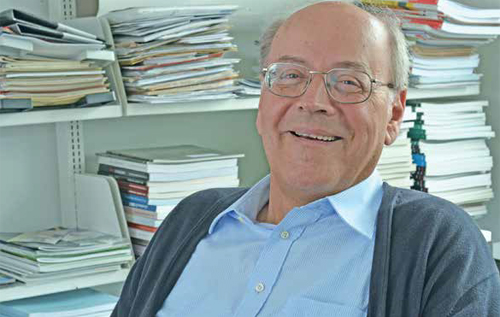
Professor Karl Wohlmuth was interviewed by the BUS Magazine of the University of Bremen about the Cooperation Project Bremen-Tunis (see BUS July 2015, Number 139)
Another important activity was the participation of Professor Achim Gutowski, as a representative of the Research Group on African Development Perspectives, at the UNESCO International Workshop "Inter-university networking for capacity-building in STI policy: Towards a comprehensive African master programme at the ENIT" in Hammamet, Tunisia (see the reports by UNESCO on the meeting and on the ETP programme with the links: http://www.unesco.org/new/en/media-services/single-view/news/unesco_working_to_strengthen_capacities_in_sti_policy/#.ViSw2m73EdU and http://www.unesco.org/new/en/unesco/events/all-events/?tx_browser_pi1[showUid]=31206&cHash=87c0b463af ; all the documents for the International Workshop and about the ETP programme at ENIT can be downloaded as well as the Photo Gallery). The project is part of UNESCO's Priority Africa Programme.
Source: UNESCO, UNESCO's Priority Africa Programme
The documents are also available in PDF format: the List of participants, the Concept note, the ETP programme, the Workshop Booklet, and the Official Photo of the International Delegates .The Photo Gallery of the Meeting in Hammamet is accessible at: https://www.flickr.com/photos/127450990@N05/sets/72157654594903029/ . Professor Dr. Achim Gutowski was appointed as a member of the Scientific Advisory Board of UNESCO for this project. The media coverage of the event in Hammamet and about the ETP programme was great (see the following entries: http://www.leconomistemaghrebin.com/tag/enit/ and https://www.facebook.com/etp.enit and http://www.taasti.org/etp/fr/documents.html and http://kapitalis.com/tunisie/2015/06/15/universite-lenit-lance-le-1er-master-en-politiques-des-sti/ and http://www.unesco.org/new/en/unesco/events/all-events/?tx_browser_pi1[showUid]=31206&cHash=87c0b463af ). A detailed plan for the workshop follow-up was agreed upon since, and an online platform for STI collaboration was installed, with IWIM being part of it. At the workshop, an agreement was reached to establish a "community of practice" (COP), an online collaborative space, named the "Inter-academic network for capacity-building in STI policy". This will be a platform to share resources and learning/teaching tools among the many partners to the project.
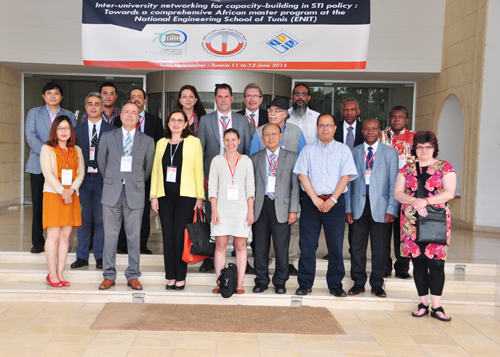
Source: TAASTI, Workshop on Inter Academic networking for STI Policy
Other activities ongoing are the works on the MOOC programme, an Online Course on the Innovation System of the Country State of Bremen; responsible experts for this task from the German side are Professor Dr. Hans-Heinrich Bass, University of Applied Sciences Bremen, and Dr. Yildiray Ogurol, Head of the Media Center of the University of Bremen; Professor M'Henni and Professor Thouraya Guizani are the responsible persons for the Tunisian side to do the work on the MOOC. An International Conference in Tunis is planned by Professor Jelel Ezzine, ENIT/TAASTI. The main theme will be: "STI Policies in Tunisia and Economic Changes in the Region".